You’ll see many multi-page reviews on the internet with all kinds of benchmarks, complex overclocking scenarios and interminable technology-based theorizing regarding which is best but we’re taking a slightly different approach.We’re taking things one at a time, and breaking them into discrete sections. If you want a big spreadsheet that shows the difference in clock speed between Intel and AMD Ryzen CPUs, we’ve got that. If you want a breakdown of the price-difference between AMD Ryzen and Intel CPUs, we’ve got that. If you want a benchmark-to-benchmark comparison, we’ve got that.
And if you’re the kind of person who just wants to buy the best CPU in terms of performance, features and value, we’ve got you covered too. The following
buyers guide is all about getting to the difference in a nutshell between these two CPU options.
AMD Ryzen — in a nutshell
The first wave of AMD’s mainstream Ryzen chips was split across three families: Ryzen 7, Ryzen 5 and Ryzen 3. The higher the numeral, the higher the spec of the processor. Simple enough, right?
This initial three-tiered approach also made it pretty easy to compare AMD’s Ryzen chips against the competition. The Ryzen 3 was an entry-level alternative to the Intel i3, the Ryzen 5 was a mainstream counterpart to the Intel i5, and the Ryzen 7 was pitched in opposition to the performance offered by an Intel i7.
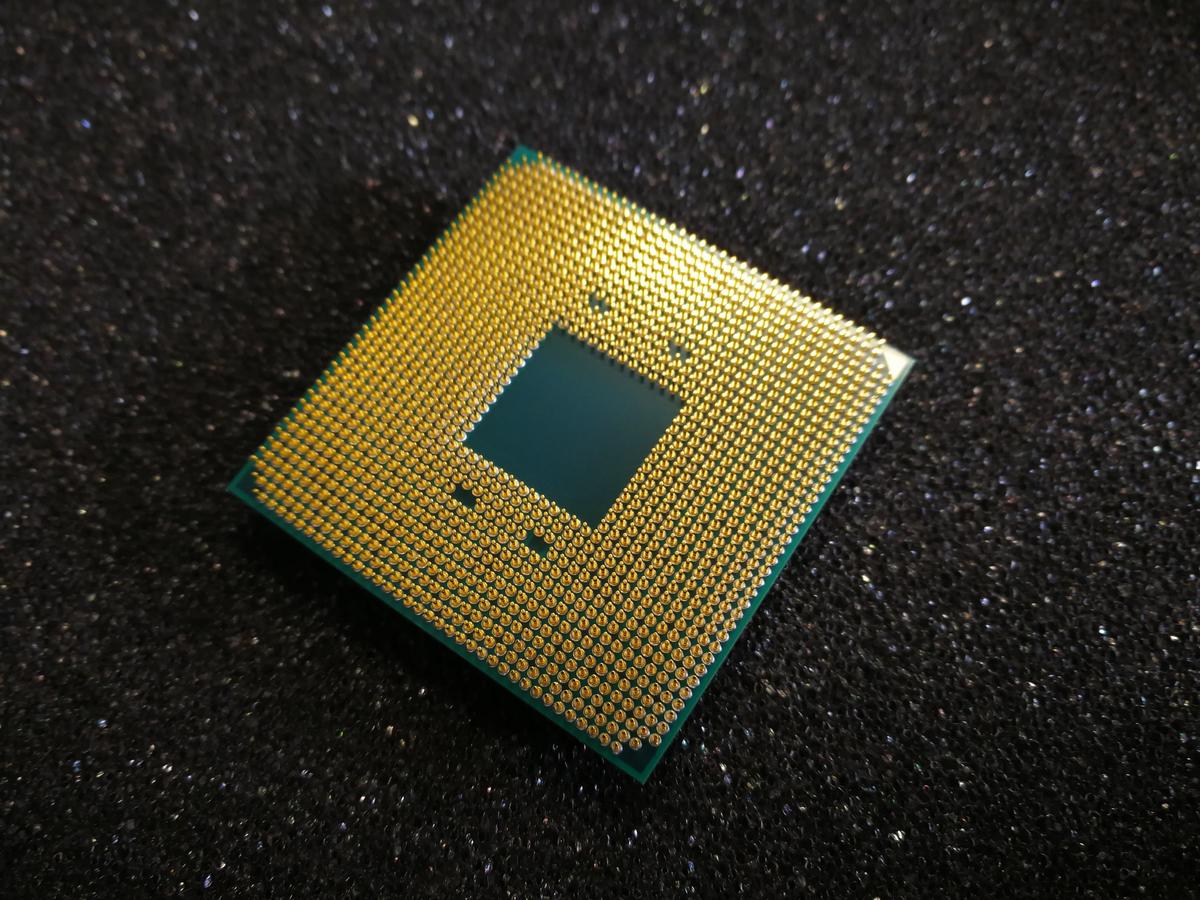
Then, in 2018, AMD introduced their second wave of Ryzen CPUs. Relying on a new 12nm manufacturing process and Zen+ architecture, this second series of Ryzen CPUs was broken out into four families. The Ryzen 3, Ryzen 5 and Ryzen 7 all returned. This reincarnated Ryzen family offered higher boosted clock speeds, reduced power consumption
However, this time around, AMD also topped out the range with a set of ultra-high-end CPUs called Threadrippers.
Where the mainline Ryzen range offers an impressive 8 cores and 16 threads, the Threadripper series starts at 12 cores and 24 threads and goes all the way up to 32 cores and 64 threads. It’s wild.
The extra processor cores offered by Ryzen compared to Intel’s Kaby and Coffee Lake CPUs means that certain tasks will run MUCH faster. If you do a lot of 3D rendering/video encoding or any of your favourite games run better on multiple cores (few do, but some popular titles like Battlefield 1 and Civ are included in the short-but-growing list) then the extra money is well worth paying.
The extra cores can also help with video game streaming on services like Twitch.
With Computex on the horizon, AMD are sure to be readying the next wave of Ryzen hardware. But, right now, every AMD Ryzen CPU you can build a desktop PC around falls into one of the following four families:
- Ryzen 3
- Ryzen 5
- Ryzen 7
- Ryzen Threadripper


